
Adjustable Bench vs Flat Bench for Home Gym Setup 
When building a home gym or upgrading a commercial fitness setup, one of the most important equipment decisions revolves around the type of weight bench you choose. Among the most debated options are the adjustable bench and the flat bench. While both serve as foundational tools in strength training, they differ significantly in design, biomechanics, functionality, and training outcomes.
This in-depth, theoretical guide will explore the differences between an adjustable bench and a flat bench, focusing on biomechanics, muscle activation theory, stability principles, progressive overload, and long-term training goals. By the end of this article, you will clearly understand which bench aligns best with your fitness objectives.
Understanding the Flat Bench

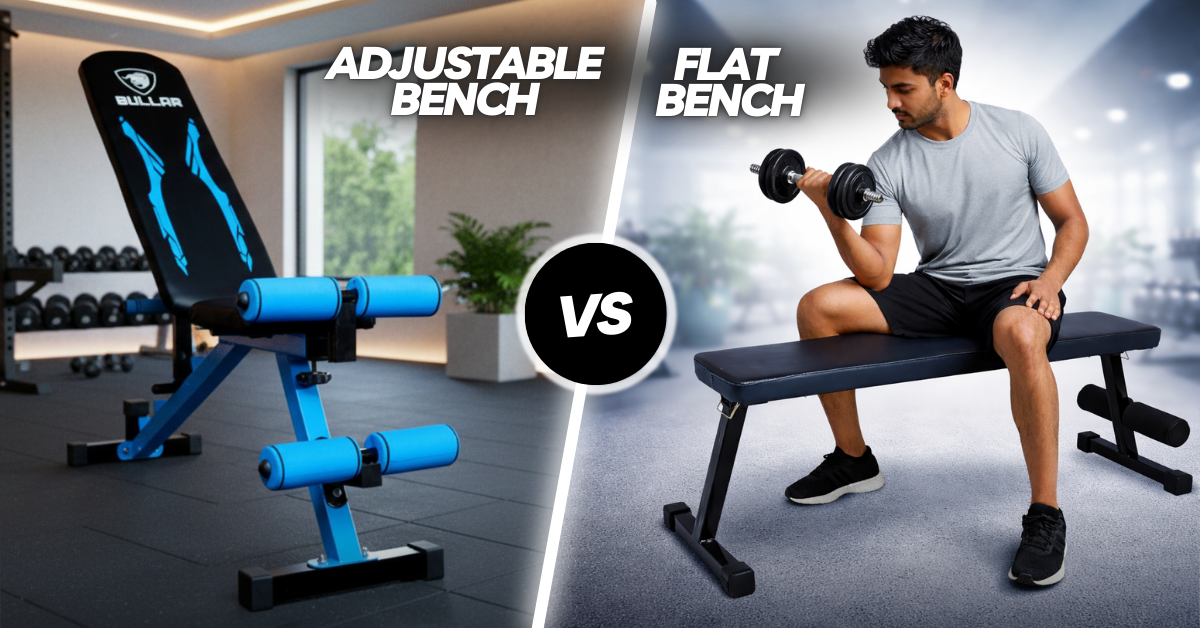
A flat bench is a simple, horizontal bench designed primarily for exercises performed in a supine (lying flat) position. It is most commonly associated with the barbell bench press but is also widely used for dumbbell exercises, skull crushers, and seated movements.
Structural Characteristics
- Fixed horizontal angle (0 degrees)
- Minimal moving parts
- Typically compact and sturdy
- High weight capacity due to simple design
Theoretical Advantages of a Flat Bench
Maximum Stability
From a biomechanics standpoint, stability enhances force production. A flat bench provides a consistent base of support, allowing lifters to generate optimal power during compound movements such as the bench press.
Improved Power Transfer
The absence of adjustable hinges reduces mechanical flexion. This improves kinetic chain efficiency, especially during heavy pressing movements.
Enhanced Safety Under Heavy Loads
Since the structure is rigid and non-adjustable, there are fewer potential mechanical failure points.
Optimal for Powerlifting Training
In competitive strength sports, particularly powerlifting, the flat bench press is a standardized movement. Training specificity theory suggests that if your goal is maximal strength in the flat bench press, practicing on a flat bench is essential.
Understanding the Adjustable Bench

An adjustable bench allows users to modify the backrest angle to incline, flat, or decline positions. This versatility significantly expands exercise variety and muscle targeting possibilities.
Structural Characteristics
- Multiple angle settings (incline, flat, decline)
- Adjustable backrest and sometimes seat
- Slightly larger footprint
- Mechanical adjustment system
Theoretical Advantages of an Adjustable Bench
Greater Exercise Variety
According to muscle hypertrophy theory, variation in joint angles can stimulate different muscle fibers. Incline and decline positions change shoulder and chest activation patterns.
Targeted Muscle Emphasis
- Incline press emphasizes upper pectoral fibers
- Decline press increases lower chest activation
- Upright angles recruit anterior deltoids more heavily
Progressive Overload Through Angle Manipulation
Adjusting angles introduces new mechanical tension patterns, which supports long-term hypertrophy adaptation.
Space Efficiency in Home Gyms
Instead of buying multiple benches, an adjustable bench combines several training positions into one unit.
Biomechanical Comparison: Adjustable Bench vs Flat Bench
1. Stability vs Versatility
- Flat Bench: Superior stability due to fixed structure.
- Adjustable Bench: Slight compromise in stability due to moving joints.
In heavy compound lifts, stability directly correlates with force production. Therefore, for maximal strength development, the flat bench has a theoretical advantage.
However, for muscular development across multiple planes of motion, the adjustable bench offers greater training stimulus diversity.
2. Muscle Activation Patterns
Research in electromyography (EMG) suggests that muscle recruitment varies with bench angle:
- Flat angle: Balanced chest activation
- 30–45° incline: Greater upper chest involvement
- Decline: Increased lower chest emphasis
This supports the hypertrophy principle of regional muscle development — an adjustable bench allows targeted adaptation.
3. Joint Stress and Shoulder Health
Flat pressing at high volumes can increase repetitive strain on the anterior shoulder joint. Incline and neutral positions often reduce shoulder stress by modifying humeral positioning.
Thus, from a joint longevity perspective, adjustable benches provide more variation, which may reduce overuse injury risk.
Adjustable Bench vs Flat Bench for Different Training Styles
1. Strength Training
If your goal is maximal load progression in the traditional bench press, the flat bench is theoretically superior due to its structural rigidity.
2. Bodybuilding
Bodybuilding prioritizes muscle symmetry and fiber recruitment from multiple angles. An adjustable bench provides incline and decline variations that support this goal.
3. Home Gym Users
For home gym owners, versatility and space efficiency are critical. Adjustable benches eliminate the need for multiple pieces of equipment.
Durability and Mechanical Considerations
Flat benches generally:
- Have fewer mechanical joints
- Last longer with minimal maintenance
- Support higher weight loads
Adjustable benches:
- Require hinge systems and locking mechanisms
- May experience wear over time
- Need periodic maintenance checks
However, high-quality adjustable benches with reinforced steel frames can offer both durability and flexibility.
Cost Analysis
- Flat benches are typically more affordable due to their simple construction.
- Adjustable benches are more expensive but provide multifunctional benefits.
- The decision should be based on cost per exercise variation rather than just initial price.
Space and Storage Considerations
- Flat benches: Compact and easy to store
- Adjustable benches: Slightly larger footprint but multifunctional
If your training area is limited, one adjustable bench may replace multiple specialized benches.
Long-Term Progression Perspective from a long-term adaptation standpoint:
- Flat bench training maximizes neural efficiency in one primary movement.
- Adjustable bench training enhances muscular development across varied angles.
Periodization theory suggests alternating training angles over time. Therefore, adjustable benches align better with varied training phases.
Safety Considerations
For beginners:
- Adjustable benches offer lighter incline pressing options.
- Flat benches may encourage heavy lifting prematurely.
For advanced lifters:
- Flat benches are ideal for maximal attempts.
- Adjustable benches are useful for accessory and volume work.
When to Choose a Flat Bench
Choose a flat bench if:
- Your primary goal is increasing flat bench press strength.
- You train in a powerlifting-focused program.
- You prefer maximum stability.
- Budget is limited.
- You already have incline alternatives.
When to Choose an Adjustable Bench
Choose an adjustable bench if:
- You train for muscle hypertrophy.
- You want incline and decline variations.
- You have limited gym space.
- You prefer workout variety.
- You follow a full-body training routine.
Adjustable Bench vs Flat Bench: Final Verdict
The debate between an adjustable bench and a flat bench is not about which is universally better. It is about alignment with training objectives.
If maximum stability and strength specificity are your priorities, the flat bench is theoretically superior. If versatility, hypertrophy, and angle variation matter more, the adjustable bench offers greater long-term value.
For many home gym users, the adjustable bench provides the most practical balance between performance, versatility, and space efficiency. However, serious strength athletes may still prefer the uncompromising stability of a dedicated flat bench.
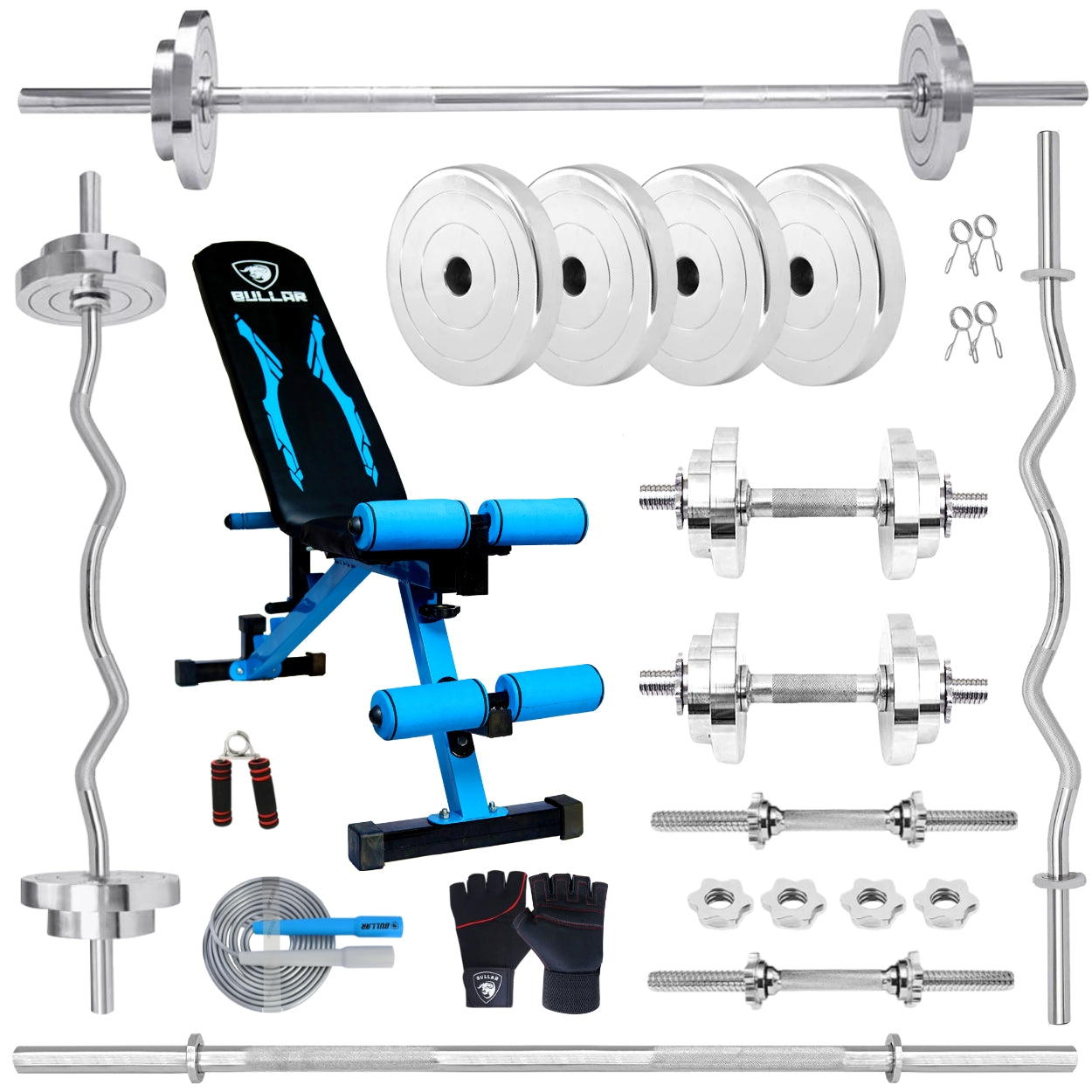
If you are looking to build a complete home gym setup, explore our premium range of dumbbells, weight plates and high-quality home gym equipment designed for effective strength training.
FAQs — Adjustable Bench vs Flat Bench
Q1. What is the main difference between an adjustable bench and a flat bench?
The main difference is flexibility. An adjustable bench allows incline, decline and flat positions, while a flat bench stays in one fixed horizontal position.
Q2. Which bench is better for home gym — adjustable or flat?
For most home gyms, an adjustable bench is better because it supports more exercise variations in limited space.
Q3. Is a flat bench stronger than an adjustable bench?
Flat benches are generally more stable and heavy-duty, but high-quality adjustable benches also offer excellent strength and durability.
Q4. Can beginners use an adjustable bench?
Yes, adjustable benches are beginner-friendly and allow gradual progression with multiple workout angles.
Q5. Which bench is best for chest workouts?
An adjustable bench is better for overall chest development because it supports flat, incline and decline chest exercises.