
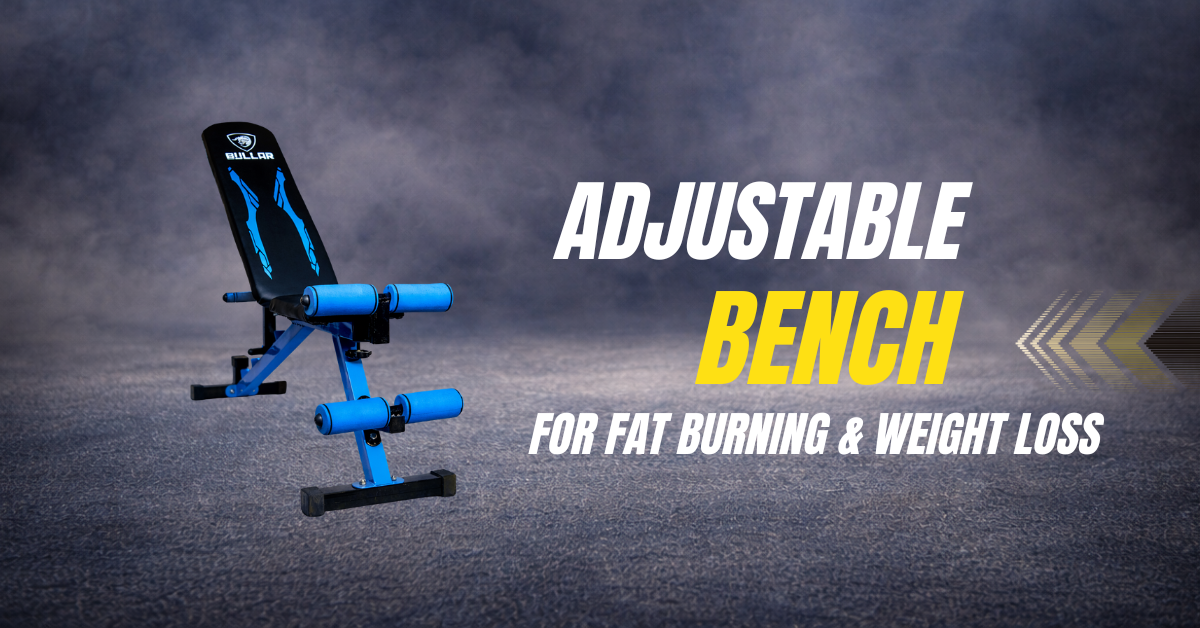
Adjustable Bench for Fat Burning & Weight Loss
An adjustable bench is one of the most powerful pieces of home gym equipment for weight loss and fat-burning workouts. A high-quality adjustable bench for home gym in India allows you to perform incline, flat and decline exercises, activating more muscle groups in every workout. When more muscles are engaged, your body burns more calories and improves metabolism, which directly supports faster fat loss. Using an adjustable workout bench for fat loss, you can perform full-body dumbbell circuits, step-ups, hip thrusts, ab workouts and high-intensity strength routines that are proven to help in sustainable weight loss. This makes the adjustable bench one of the best home gym benches for weight loss, body toning and calorie-burning home workouts.
This guide is written for buyers who want real clarity—so you can choose a bench that feels solid for years, not weeks.
What Is an Adjustable Bench?
An adjustable bench is a weight bench whose back pad (and often seat) can be set to different angles—commonly flat, incline, and sometimes decline.

Which One Should You Buy?
Flat/Incline bench is great if you mainly do:
- Flat dumbbell press
- Incline press (30–45°)
- Seated shoulder press
- Supported rows
- Bulgarian split squats
Flat/Incline/Decline bench is better if you also want:
- Decline presses
- Decline sit-ups/crunches
My practical suggestion (for most Indian home gyms):
If your goal is muscle gain + strength and you want long-term versatility, go FID—but only if the decline mechanism is sturdy and doesn’t wobble. Otherwise, a high-quality FI bench beats a weak FID bench every time.
What Check Before Buying?
1) Real Weight Capacity
Bench capacity is not just a number. It depends on:
- Steel tube thickness/gauge
- Weld quality and penetration
- Hinge + ladder/bracket design
- Backrest support structure
If you lift heavy, don’t buy based on “looks”. Choose a bench that clearly states tested capacity and is built with a stable frame. Many expert roundups use durability and sturdiness as core criteria.
How to estimate your needed capacity:
- Your body weight + heaviest dumbbells/barbell load should be safely under the bench rating.
- For example: 85 kg person + 60 kg dumbbells = 145 kg load (but dynamic load while lifting can spike higher).

2) Zero-Wobble Stability
A safe bench press setup requires a bench that doesn’t wobble—that’s literally part of safe bench press equipment guidance.
3) Back Pad Angles
A good adjustable bench should offer useful angles like:
- 0° (Flat)
- 30° (Chest focus with less shoulder stress)
- 45° (Classic incline press)
- 60–75° (Shoulder press angle range)
- 80–90° (Near-upright for some presses / supported work)
4) Seat Adjustability

- Multiple seat positions
- Firm seat that locks tight
5) Bench Height
Standard bench height is often around 17 inches / ~43 cm in many markets, but your comfort depends on your height and leg length.
6)The “Gap” Between Seat and Back Pad
Some adjustable benches have a large gap when flat. That gap can be uncomfortable for flat pressing and can affect positioning.
Which Adjustable Bench Should You Choose Based on Your Goal?
A) Beginner Home Gym (Dumbbells + Basic Strength)
- FI bench is okay
- 6–8 back positions
- 2–3 seat positions
- Good stability & fancy features
B) Muscle Gain + Progressive Overload (Serious Lifting)
- Heavy-duty adjustable bench
- Strong hinge and back support
- High capacity with safety margin
- Comfortable pad with good grip
C) Small Room / Space Saving Home Gym
- Stowable/collapsible design
- Still stable enough when locked
D) Home Gym Setup (Rack + Barbell + Plates)
Safety guidance for benching often recommends using stable equipment and safety arms/rack if you lift alone.
Best Exercises You Can Do With an Adjustable Bench
Chest
- Flat dumbbell press
- Incline dumbbell press (30–45°)
- Dumbbell fly (light/moderate)
- Close-grip dumbbell press
Shoulders
- Seated shoulder press (60–75°)
- Rear delt supported raises (incline bench)
Back
- Chest-supported dumbbell row (low incline)
- One-arm row (knee on bench)
Legs
- Bulgarian split squats
- Step-ups
- Hip thrusts (bench support)
Core
- Incline crunches
- Decline sit-ups
FAQs- Adjustable Bench
Q1) What is the best adjustable bench angle for chest?
Most lifters find 30° to 45° incline ideal for upper chest work, while keeping shoulder stress manageable. A bench with multiple angle options helps you find your best position.
Q2) FI vs FID bench—what’s better for home gym?
An FID bench (flat-incline-decline) offers maximum versatility, but only if it remains stable in every position. Many bench guides define FI and FID as the main categories.
Q3) How much weight capacity should an adjustable bench have?
Choose a bench that comfortably supports your bodyweight + your heaviest lifting load with a safety margin. Capacity depends on frame steel thickness, welds, and hinge/support design.
Q4) Is an adjustable bench worth it for beginners?
Yes. It expands your exercise options dramatically and supports progressive overload. Many buying guides call adjustable benches a cornerstone of a home gym.
Q5) How do I keep my adjustable bench stable over time?
Tighten bolts monthly, keep hinge points clean, wipe sweat after workouts, and store in a dry area. Stability matters for safe training, especially bench pressing.